Transit is the beta version of my remix hack game called Fuck The Meritocracy, which aims to make players consider all types of different privileges they have in life. There are a wide variety of privileges covered, from the college you attend to race to gender and sexuality. However, there is only one card that mentions transportation: “You do not have access to transportation to get things you want or need easily. Spin and move backward.” When trying to decide which hack to improve, I got stuck on the fact that such a major life hurdle only got one card, while things like housing insecurity or sexuality discrimination, for example, got 3 to 4 cards each. I realized that’s because I tended to highlight things that I’ve personally faced while giving other issues fewer cards. I’ve also always had transportation by car, and I think I assumed it was rare to not have a car. I shouldn’t have assumed that, given that many people on campus do not have cars. Given that fact, I decided shifting the context to transportation made perfect sense. Especially outside of colleges, where not having a reliable way to get around is one of the biggest roadblocks to survival. You couldn’t get to a doctor easily, or a food bank. Getting to work every day is a challenge in itself.
I decided that the beta hack would focus on Charlotte. While the general nature of Fuck the Meritocracy was useful, there is a lesson to learn by focusing on an area near us. I chose to focus on the underdeveloped train system because when I think of public transportation, that’s what I think of: the subway, the tube, etc. I visited New York and was shocked at how many stops the subway has, allowing you to arrive at your actual destination within less than 10-15 minutes of walking. Of course, Charlotte has a robust bus system but there are too many routes to display in a board game with a 96-box grid system. That sounds like a lot, but to cover all the bus stops the boxes would need to be a lot smaller and the game would take forever. Additionally, the vastness of Charlotte does not always allow you to get off the bus and take a short walk to your final destination.
This version of my hack subverts Chutes and Ladders, the game I originally remixed. The board game is a map of Charlotte with each ladder roughly laid to mimic where the real train route goes. You will notice that a large part of the map has no train routes at all, and those areas correspond to either very poor or very rich areas of Charlotte. While the trains serve as ladders, they rarely provide an advantage. There are no chutes for that reason. Additionally, instead of using a spinner players move around based on what token they are: a car or a train. The cars signify that you have a car to get around in, while the train means you can only use public transportation and then walk the rest of the way. Subsequently, the drivers get to roll two dice to make their movement easier, and the train riders only get to roll one die. If one of the train riders makes it near their destination but not exactly to it, they have to “walk” the rest of the way by rolling their die however many times it takes to get to the area. This is meant to frustrate the player who doesn’t have a car, and their frustration is amplified when they see the other players breezing by them.
My original remix was theoretically bolstered by Carl DiSalvo’s theory of agonism, but I didn’t detail how related it was because it almost made so much sense to me that I didn’t give it much description. However, the beta release is more concretely related to a case study he focuses on in “Design and Agonism” in Adversarial Design: Million Dollar Blocks. The project demonstrates how the bulk of prisoners come from specific areas in several cities across the country including New York, Phoenix, Wichita, and New Orleans. The data shows that prisoners come disproportionately from several of the same communities. This means that millions of dollars are being spent imprisoning people from those areas at higher rates than everywhere else in the city.
Additionally, those people are reincarcerated after three years of being released back home, on average. DiSalvo says Million Dollar Blocks is an example of agonistic design because it meets these conditions: “The foundation of agonism is a commitment to contestation and dissensus as integral, productive, and meaningful aspects of democratic society.” Million Dollar Blocks highlights the issues within urban planning since a high percentage of prisoners come from specific areas. Similarly, my project also highlights issues where urban planning and transportation planning intersect. Charlotte has trains through the busier, desirable parts of town like Uptown with all its stadiums and venues or Noda and Plaza Midwood with their curated, young “vibes.” The city does not have the same types of trains throughout the lower-income, less-white areas. Instead, those areas only have bus systems. While I am sure that system is useful, it’s worth asking why the investment in Lynx trains hasn’t been made in those areas. They would certainly benefit from being connected to other areas of the city. My project advocates for building more public transportation to make access to it equitable for everyone in Charlotte.
Design Documents


I had a lot of trouble figuring out what size the grid should be for the game. I was using Canva, and the only good option for customizable square sizes was the table option. The tables were not convenient to use, and I couldn’t figure out how to make a table with more than four squares, so the grid is a 1×4 copied and pasted over and over again. You also can’t group tables, so I had to select them all each time I moved them. It wasn’t until the end that I realized when you select all of them you can change the size of the entire table instead of one box at a time. In the end, I realized it was smarter to take the map I wanted to use, insert it, and then overlay the grid.
My initial concept was drastically different from the final product. I was going to make the board look like a road, with recognizable colors like black and yellow. The grid was also going to be a curved path instead of squares. But I learned very quickly I could not draw symmetrical curves, and I couldn’t figure out how to make the game mean something. Each square was going to be numbered like the original Chutes and Ladders with a foot to represent those with no cars. That is when I decided to make it more specific. I figured a real map could provide structure.

The black lines made the words difficult to see, so I created a rectangular shape and edited the transparency and then placed it behind the grid. Still, the grid shape looked really awkward on the map:

I decided to make the map much bigger to reduce the whitespace on the sides, which naturally led to the grid getting wider and longer. Thankfully this is when I discovered you can change the width of all the tables when they are all selected.

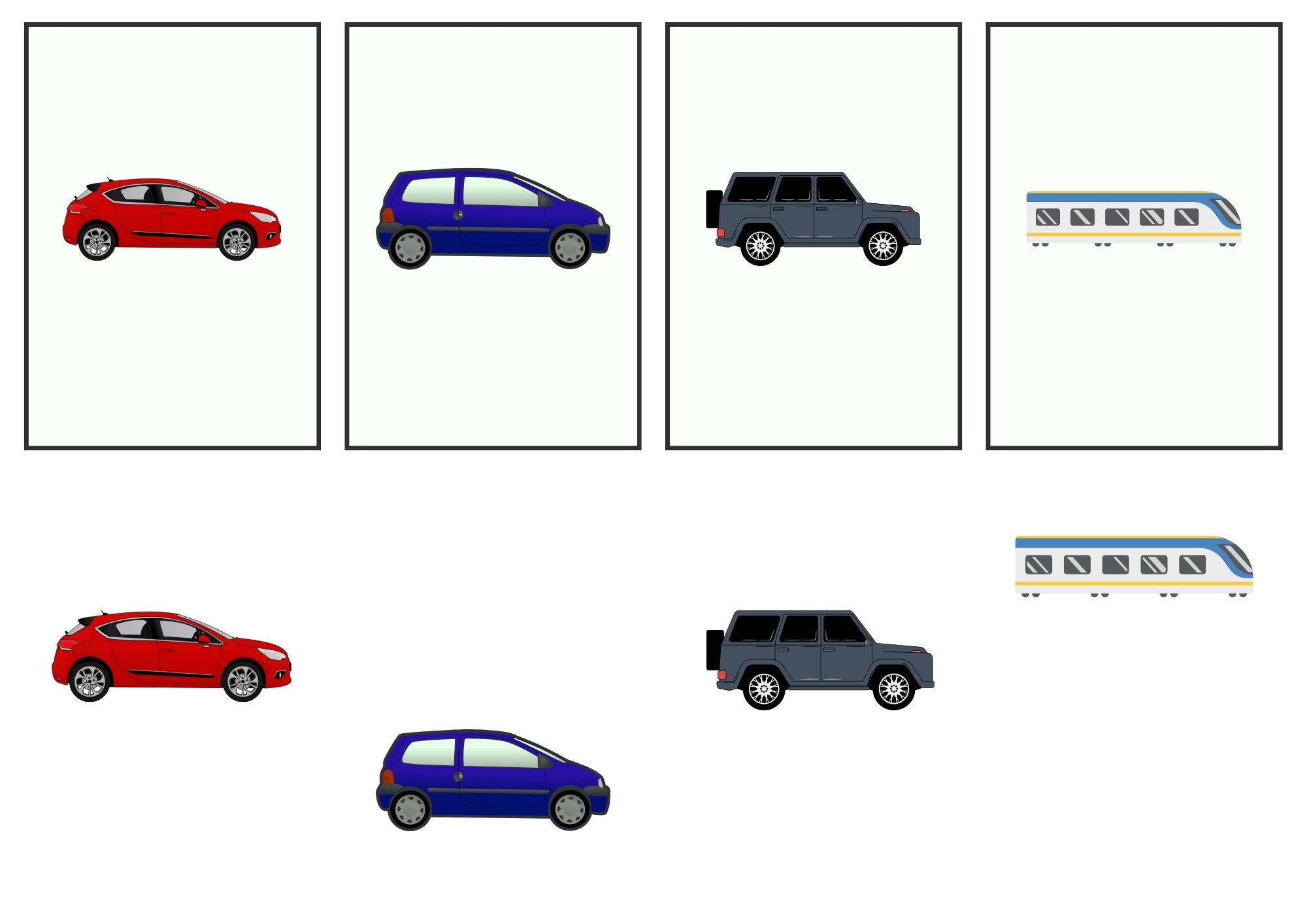
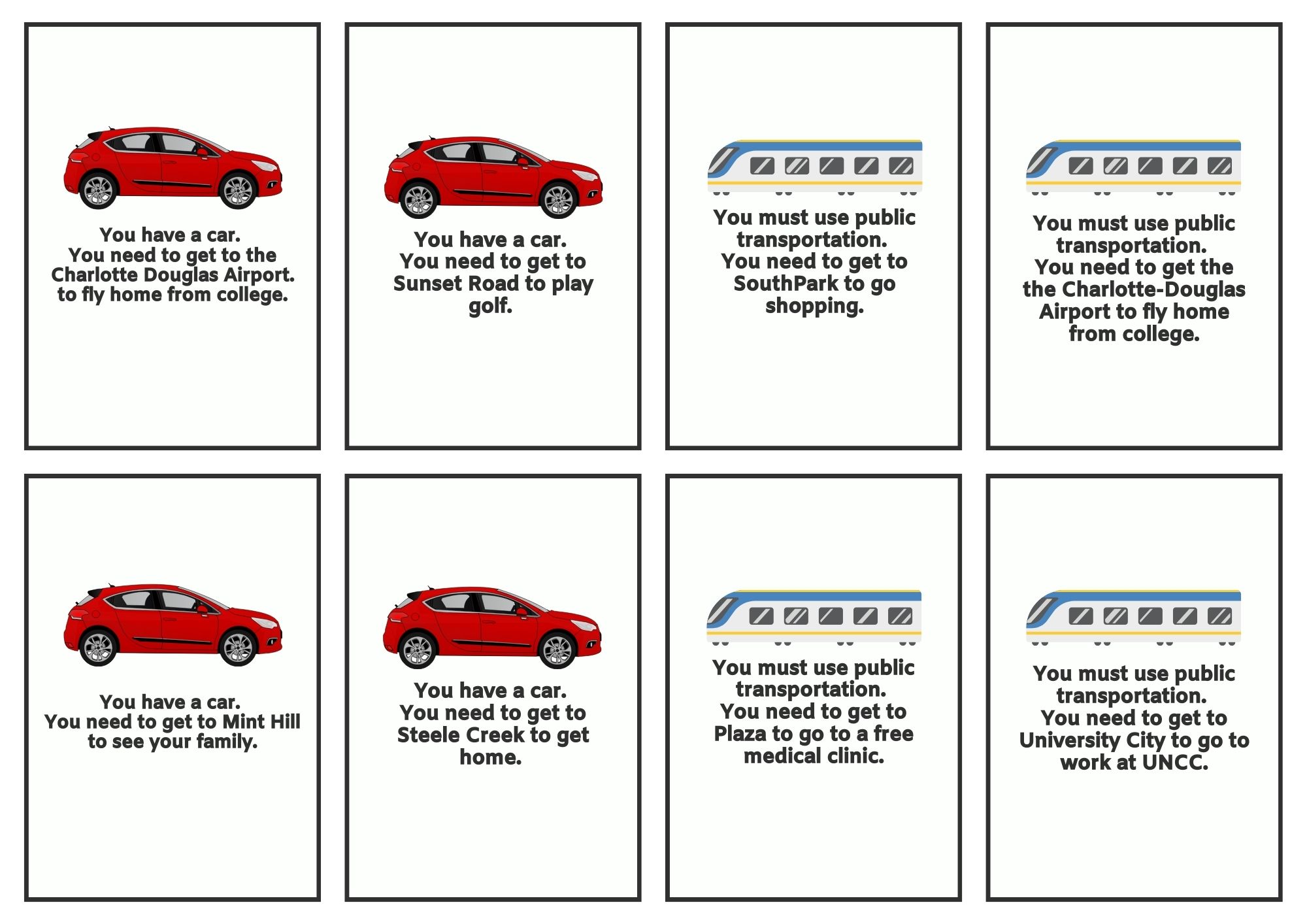
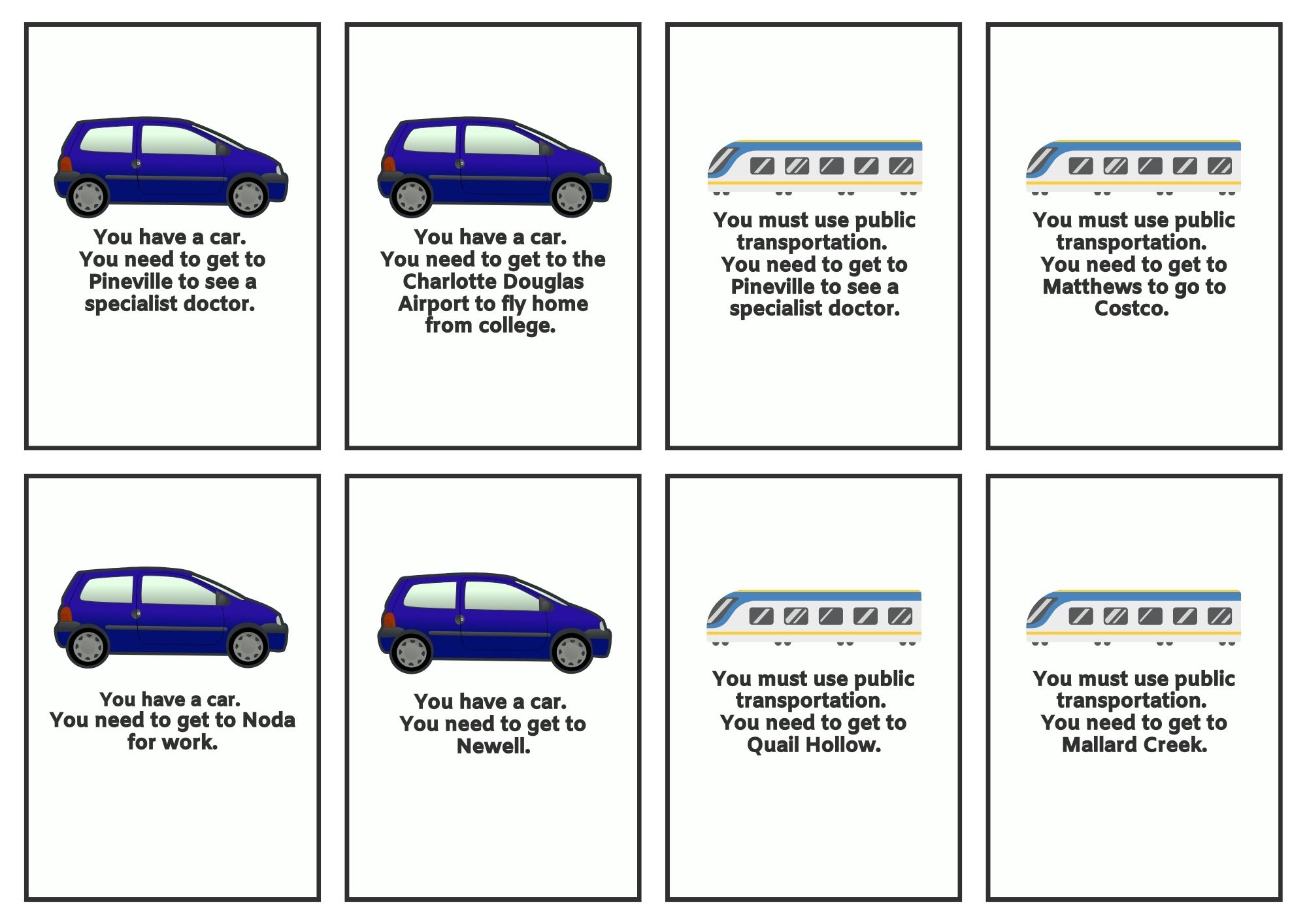
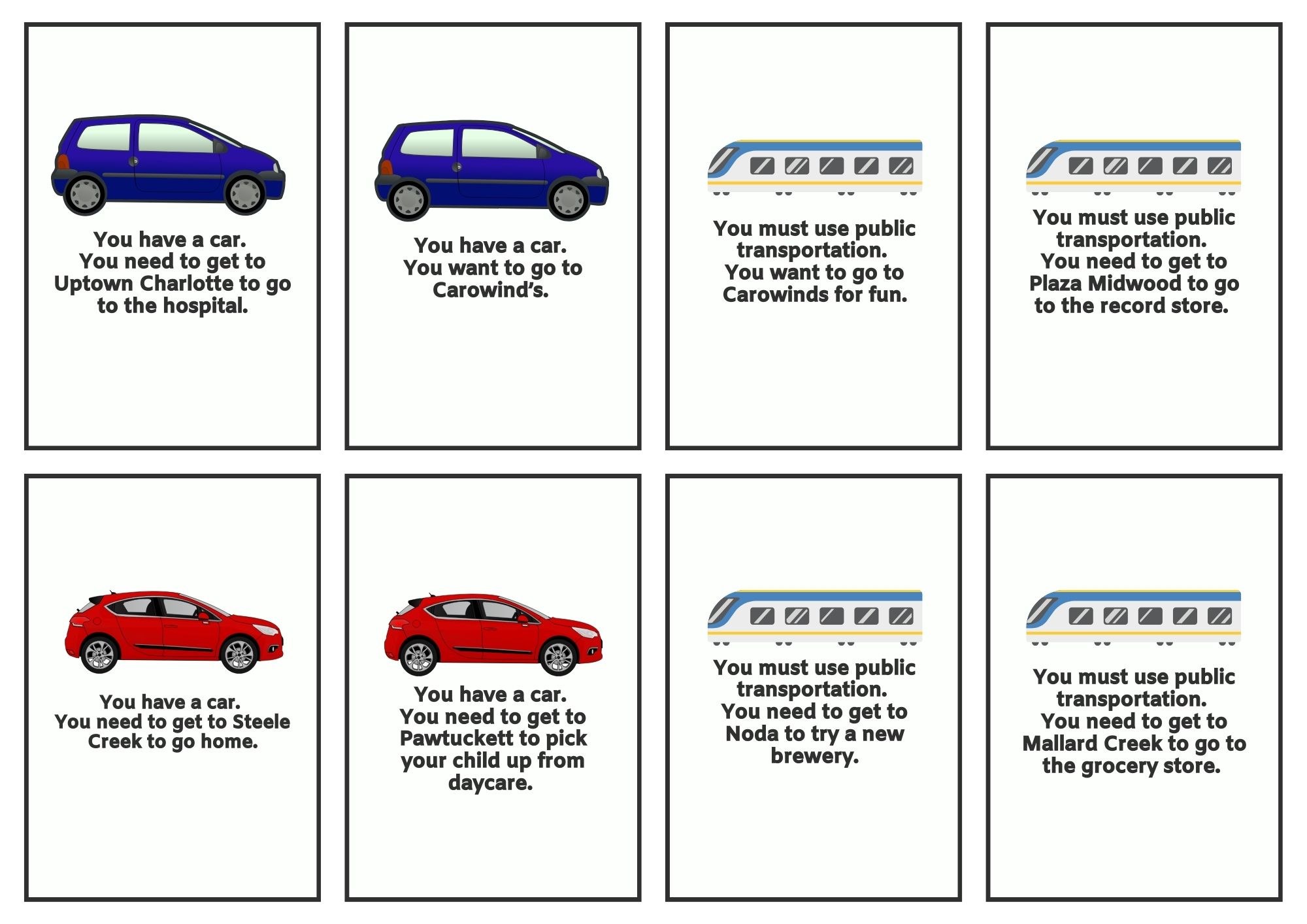
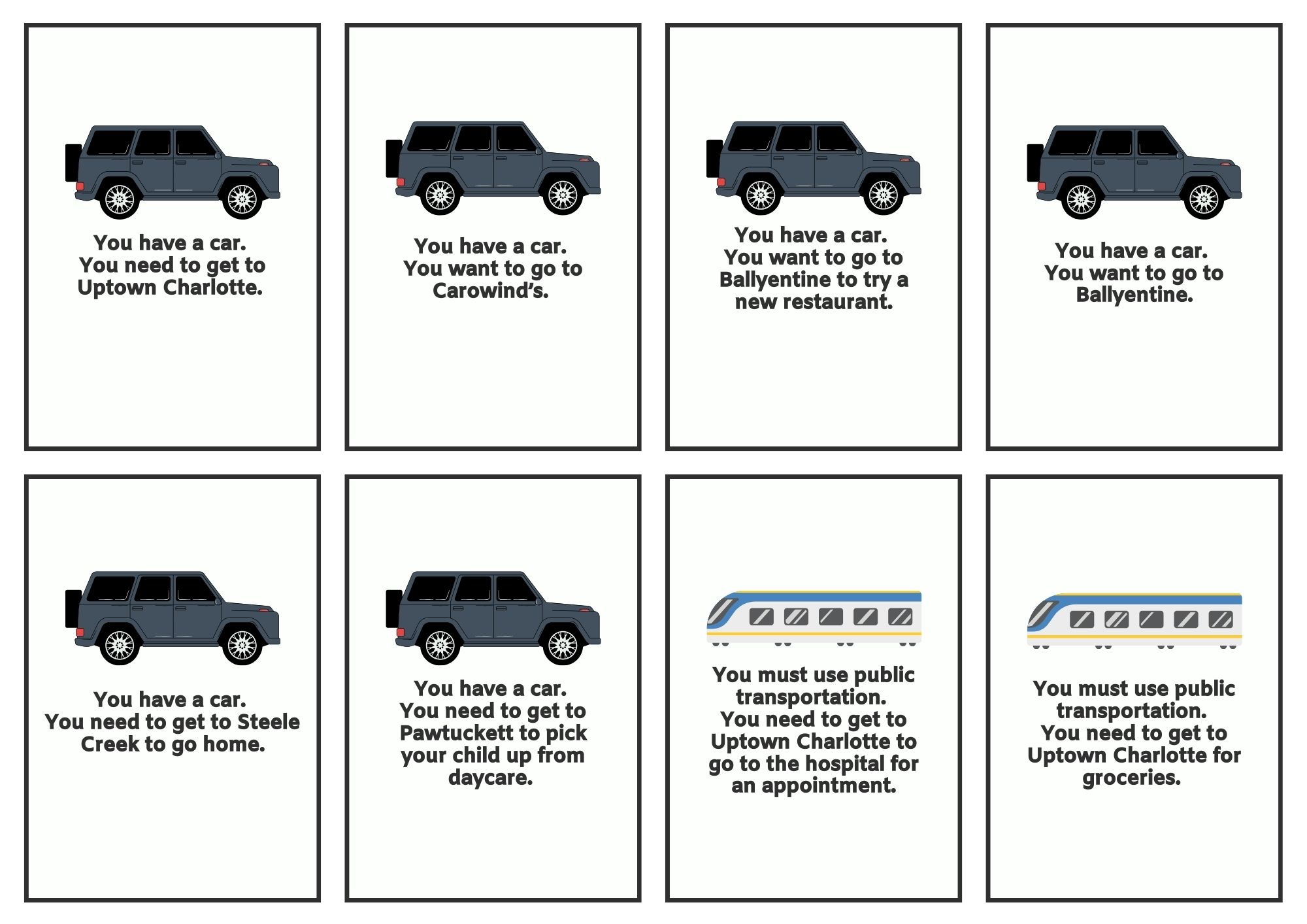
The cars were not always on the side of the map, though. They came to me (with the token idea) when I was deciding what pictures to put on the cards. Players find out which token they are by drawing from a pile of four cards with pictures of the cars or train. I figured that each car could have different objectives to make the game interesting. Instead of everyone trying to reach the finish line like in the original Chutes and Ladders, they have different winning points. The game is never really won, I guess, unless someone completes all six of their cards. The person using public transportation wins if they can complete three of their many cards, since their task is far more difficult. The starting point is the same for everyone, but players could edit that starting point to make the game more challenging. For example, what if I was in University City and I needed to get to Noda?
I used the same card template I used for the alpha release, but I changed them to reflect the focus of the beta game: transportation.
Sources:
Carl DiSalvo, “Design and Agonism” from Adversarial Design (2012), 12.
“Million Dollar Blocks | Center for Spatial Research.” n.d. Accessed April 29, 2025. https://c4sr.columbia.edu/projects/million-dollar-blocks.
